
Working Group Meeting on General-Purpose Optimisation Solvers Based on the ROAR-NET API
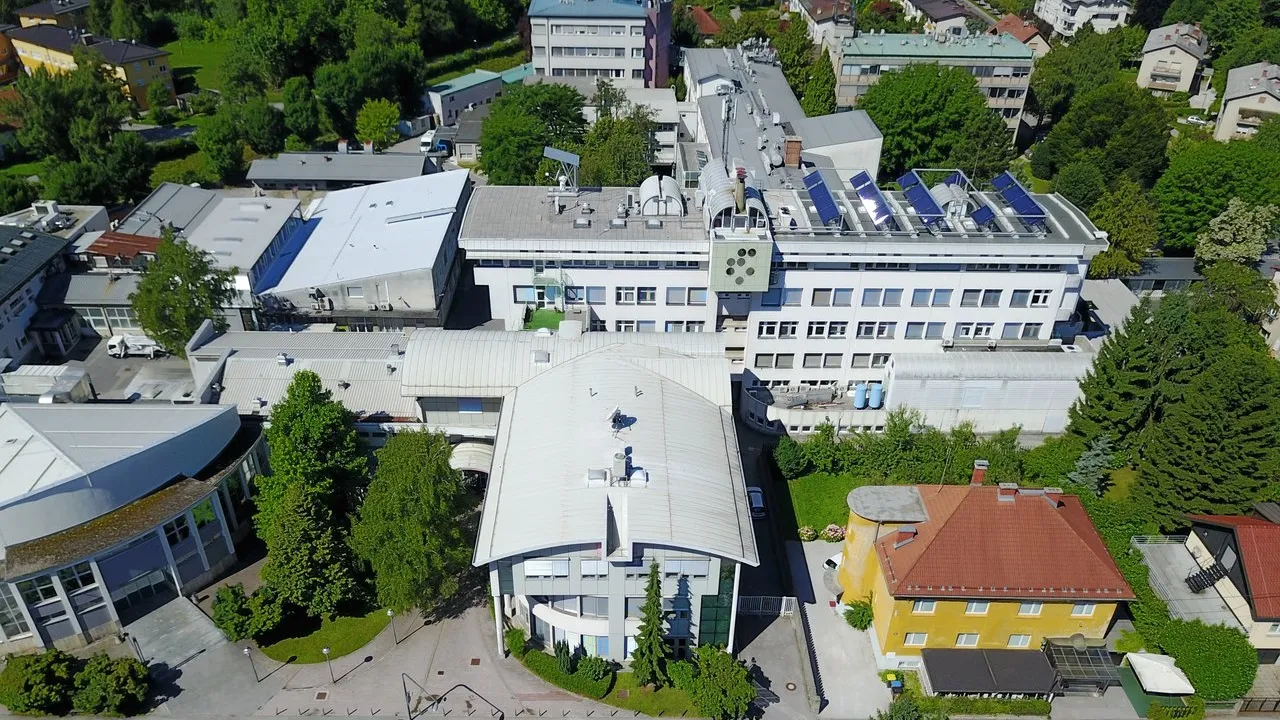
Jožef Stefan Institute
Jamova cesta 39
1000 Ljubljana
Slovenia
9–10 June 2026
About the meeting
The meeting is aimed at exploring how algorithm selection, configuration and adaptive mechanisms can be leveraged to design general-purpose solvers based on the ROAR-NET API. Concrete aspects to be discussed include the role and readiness of algorithm selection and configuration techniques for general-purpose optimisation solver development, problem model requirements, solver development constraints arising from the ROAR-NET API, implementation challenges, and performance and robustness evaluation aspects.
Programme
Tuesday, 9 June 2026
| 09:00 – 09:30 | Welcome Chair: Bogdan Filipič, Local Organiser |
| About ROAR-NET Carlos M. Fonseca, Action Chair | |
| 09:30 – 10:30 | Oral presentations Chair: Denis Pallez, WG1 Vice-Leader |
| General-purpose randomised optimisation solvers Carlos M. Fonseca, Action Chair AbstractThe development of practical general-purpose randomised optimisation solvers for combinatorial and mixed numerical-combinatorial optimisation problems is at the core of ROAR-NET’s strategy to foster the widespread adoption of randomised optimisation algorithms (ROAs) in the real world. Achieving interchangeable operation of ROAs on these types of problems represents a major breakthrough, with potential for substantial scientific, technological and socioeconomic impacts. While the ROAR-NET API, in its current state, already demonstrates how simple off-the-shelf solvers can be applied to very different combinatorial optimisation problems, the success of the approach will inevitably depend on the level of performance that can be realised with more advanced solvers. This presentation discusses the challenges posed and the opportunities afforded by the development of general-purpose randomised optimisation solvers as a new avenue for research. | |
| Dynamic algorithm selection and configuration for black-box optimisation Anja Jankovic, WG5 Member AbstractBlack-box optimisation algorithms are typically configured and selected offline, resulting in a static optimisation strategy that remains fixed throughout the search process. However, optimisation landscapes often exhibit different characteristics at different stages of the search, making a single algorithm or configuration suboptimal over the entire optimisation run. In this talk, we explore dynamic approaches to algorithm selection and algorithm configuration in black-box optimisation, where decisions are adapted online based on observed search behaviour, performance indicators, and problem characteristics. We discuss recent advances in adaptive algorithm portfolios, dynamic hyperparameter control, and learning-based selection mechanisms, highlighting how these techniques can improve robustness and efficiency across diverse optimisation tasks. Lastly, we discuss open challenges and emerging research directions toward fully adaptive optimisation systems that continuously adjust their behaviour during the search process. | |
| 10:30 – 11:00 | Coffee break |
| 11:00 – 12:30 | Open discussion Moderator: Elena Raponi, WG5 Leader |
| 12:30 – 14:00 | Lunch |
| 14:00 – 16:00 | Break-out sessions |
| 16:00 – 16:30 | Coffee break |
| 16:30 – 18:00 | Break-out sessions |
Wednesday, 10 June 2026
| 09:00 – 09:15 | Welcome Bogdan Filipič, Local Organiser |
| 09:15 – 10:30 | Report from the break-out sessions Chair: Marco Chiarandini, WG1 Leader |
| 10:30 – 11:00 | Coffee break |
| 11:00 – 12:30 | Oral presentations Chair: Tea Tušar, WG6 Member |
| HeuristicLib: Building an extendable library for randomized optimization algorithms Bernhard Werth, University of Applied Sciences Upper Austria AbstractResearch on randomized optimization algorithms often requires substantial engineering effort before new ideas can be tested, compared, and analyzed. HeuristicLib is off-shoot of long-established HeuristicLab and an open-source library developed mainly in C# that also can be used cross-language (e.g. with Python). It aims to reduce implementation burden by providing reusable infrastructure for optimization problems, representations, operators, algorithms, experimentation, and analysis. The library focuses on fast development while keeping composability, reproducibility, strong typing, and extensibility while also remaining independent of any single metaheuristic paradigm (though evolutionary algorithms and symbolic regression are clearly a focus). This presentation introduces the motivation behind the project, outlines the central architectural concepts, and discusses design decisions, trade-offs, and lessons learned while developing a reusable optimization library for research. | |
| Modular algorithm components for combinatorial optimisation within the ROAR-NET API Kazım Erdoğdu, WG3 Member AbstractRandomised Optimisation Algorithms (ROAs) are widely used to solve complex optimisation problems in domains such as logistics, manufacturing, and transportation. Their performance strongly depends on the design and interaction of key algorithmic components such as neighbourhood operators, mutation and recombination mechanisms, and local search procedures. This STSM aimed to investigate these modular algorithm components and integrate them into the ROAR-NET API in a reusable and configurable way. The work involved implementing selected components within the ROAR-NET API and evaluating their behaviour on representative benchmark instances of the Vehicle Routing Problem (VRP) and its variants. Through systematic experimentation, the study analysed how different combinations of algorithm components influence optimisation performance. The outcomes will contribute to the development of flexible optimisation infrastructures and support ongoing efforts within ROAR-NET to enable modular algorithm design and reproducible experimentation. | |
| Automatic algorithm configuration for the delivery problem: Challenges and opportunities met at the industry level Imène Ait Abderrahim, WG5 Member AbstractThis work is about the application of automatic algorithm configuration methods for the delivery problem in collaboration with a company in France, which already had an existing basic solution. The goal was to provide an automated design algorithm that improves their performance without messing with the basic structure of their algorithm. The presentation resumes the challenges and opportunities one can meet by working together with industry people. | |
| LLaMEA-SAGE: Guiding automated algorithm design with structural feedback from explainable AI Lars Kotthoff, WG5 Member AbstractLarge language models have enabled automated algorithm design (AAD) by generating optimization algorithms directly from natural-language prompts. While evolutionary frameworks such as LLaMEA demonstrate strong exploratory capabilities across the algorithm design space, their search dynamics are entirely driven by fitness feedback, leaving substantial information about the generated code unused. We propose a mechanism for guiding AAD using feedback constructed from graph-theoretic and complexity features extracted from the abstract syntax trees of the generated algorithms, based on a surrogate model learned over an archive of evaluated solutions. Using explainable AI techniques, we identify features that substantially affect performance and translate them into natural-language mutation instructions that steer subsequent LLM-based code generation without restricting expressivity. We propose LLaMEA-SAGE, which integrates this feature-driven guidance into LLaMEA, and evaluate it across several benchmarks. We show that the proposed structured guidance achieves the same performance faster than vanilla LLaMEA in a small controlled experiment. In a larger-scale experiment using the MA-BBOB suite from the GECCO-MA-BBOB competition, our guided approach achieves superior performance compared to state-of-the-art AAD methods. These results demonstrate that signals derived from code can effectively bias LLM-driven algorithm evolution, bridging the gap between code structure and human-understandable performance feedback in automated algorithm design. | |
| 12:30 – 14:00 | Lunch |
| 14:00 – 15:30 | Break-out sessions |
| 15:30 – 16:00 | Coffee break |
| 16:00 – 17:00 | Report from the break-out sessions Chair: Alexandre Jesus, Software Development Coordinator |
| 17:00 – 18:00 | Future directions Moderators: Elena Raponi, WG5 Leader, and Marco Chiarandini, WG1 Leader |